Trusted and Exploited: How Attackers Use Your Vendors as a Back Door Into Your Network
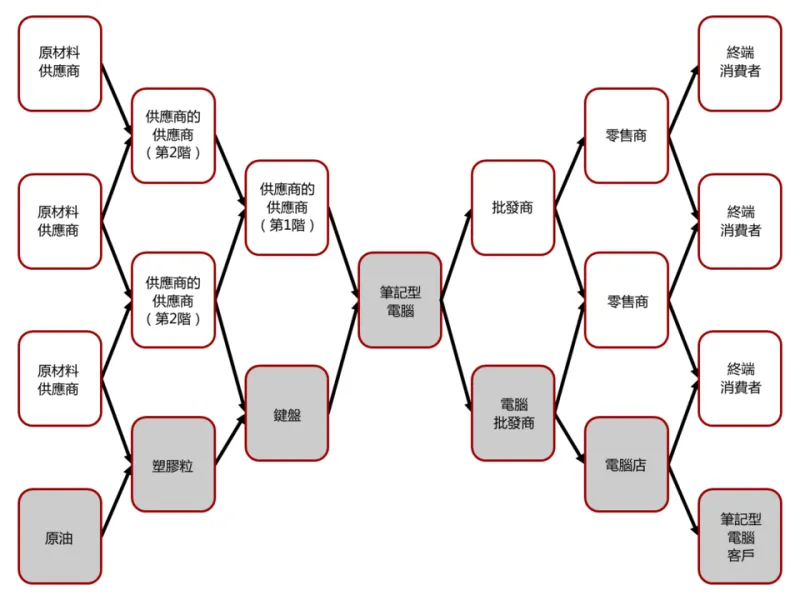
Photo: Andreas Wieland, Supply Chain Management Research, CC BY-SA 3.0, via Wikimedia Commons
For decades, the security industry has treated DDoS attacks as a problem of availability—an adversary attempts to knock a target offline, the target defends or recovers, and the incident is closed. That model is dangerously incomplete. A new class of attack campaigns, documented across multiple sectors in the United States, reveals that volumetric floods are increasingly deployed not to destroy availability but to study it—to observe how networks respond, which dependencies crack first, and where secondary access points silently emerge.
The target is rarely the enterprise itself. It is the managed service provider, the SaaS platform, the logistics API, or the cloud-hosted payroll vendor sitting two or three links away from the actual prize.
The Reconnaissance Value of a Flood
When a DDoS attack saturates a third-party vendor's infrastructure, several things happen simultaneously that are invisible to the vendor's enterprise clients. Automated failover systems activate, rerouting traffic through backup circuits. Monitoring agents generate alerts that propagate upstream. API connections time out, triggering retry logic that exposes endpoint structures. Network operations teams scramble, sometimes disabling rate-limiting controls or opening diagnostic ports to accelerate recovery.
To a patient, well-resourced adversary watching external traffic flows, this chaos is a blueprint. The pattern of retries, failovers, and exposed diagnostics effectively maps the enterprise's dependency graph—identifying which internal systems rely on the compromised vendor, how data moves between them, and where authentication handshakes occur.
Security researchers at several US-based threat intelligence firms have documented this technique under various labels, including "dependency mapping via induced failure" and "supply chain stress testing." The terminology differs; the mechanism is consistent. The flood is not the attack. The flood is the setup.
Case Anatomy: When a Vendor's Outage Becomes an Enterprise Breach
Consider a composite scenario drawn from anonymized incident reports shared within the US financial services sector. A mid-sized regional bank relies on a third-party treasury management platform hosted by a cloud service provider. In early 2023, that provider sustained a multi-vector DDoS campaign lasting approximately eleven hours. The bank's IT team, focused on its own uptime, monitored the situation from a distance and assumed its exposure was limited to service degradation.
What the bank did not know: during the attack window, its own network monitoring tools generated a series of automated alerts that included internal subnet identifiers in their outbound diagnostic payloads. Those payloads, destined for the vendor's support infrastructure, were intercepted. Within seventy-two hours of the DDoS subsiding, the bank detected anomalous authentication attempts targeting internal systems that had no public-facing presence—systems whose addresses had been exposed only through the diagnostic traffic generated during the vendor's outage.
The DDoS attack cost the vendor a few hours of availability. The reconnaissance it enabled cost the bank months of remediation and undisclosed regulatory scrutiny.
Similar patterns have been reported—with varying degrees of specificity—in the healthcare, energy, and retail sectors. The common thread is not the size of the enterprise or the sophistication of its internal defenses. It is the assumption that a vendor's crisis is the vendor's problem.
Why Supply Chain DDoS Is Structurally Underreported
American enterprises face a reporting environment that creates perverse incentives around supply chain incidents. When a company's own infrastructure is attacked, disclosure obligations under frameworks like the SEC's 2023 cybersecurity incident reporting rules are relatively clear. When a vendor is attacked and the enterprise experiences downstream reconnaissance or secondary compromise, the causal chain is murkier—and legal counsel frequently advises restraint.
This opacity benefits attackers enormously. Without a consolidated picture of supply chain DDoS campaigns, enterprises cannot identify patterns, vendors cannot benchmark their exposure, and regulators cannot calibrate appropriate requirements. The information asymmetry is, in effect, a structural vulnerability.
The Cybersecurity and Infrastructure Security Agency (CISA) has acknowledged the supply chain attack surface in its cross-sector guidance, but specific DDoS-as-reconnaissance documentation remains sparse in public-facing advisories. Private sector threat sharing groups—particularly the FS-ISAC and the Health-ISAC—have circulated more granular intelligence, but membership and access constraints limit the reach of that information.
Building a Supply Chain DDoS Resilience Framework
Defending against this threat requires a fundamental shift in how enterprises think about third-party risk. The following framework reflects practices currently being adopted by leading US organizations in response to documented supply chain DDoS campaigns.
1. Vendor DDoS Posture Assessment Every significant vendor relationship should include a formal assessment of the vendor's DDoS mitigation capabilities—not just their general security posture. Questions should address scrubbing capacity, upstream provider relationships, failover architecture, and incident communication protocols. Vendors unable or unwilling to provide this information represent elevated risk.
2. Diagnostic Traffic Hardening Enterprises must audit what information their monitoring and alerting systems expose during outage events. Diagnostic payloads that include internal network identifiers, IP ranges, or system names should be sanitized or encrypted before transmission to external parties. This is a low-cost, high-impact control that is routinely overlooked.
3. Dependency Graph Documentation and Segmentation Organizations should maintain an accurate, current map of which internal systems communicate with which external vendors, and under what conditions. Systems that are not intended to be internet-reachable should have their vendor-facing communications routed through dedicated, tightly controlled egress points—not through the same paths used by general enterprise traffic.
4. Contractual DDoS Notification Requirements Vendor contracts should require prompt notification when the vendor sustains a DDoS attack of any significant duration. Forty-eight hours is the current industry benchmark in more mature sectors; many contracts contain no such requirement at all. Notification enables the enterprise to heighten monitoring during the window of greatest reconnaissance risk.
5. Post-Incident Supply Chain Review Following any vendor DDoS event, the enterprise should conduct its own review—independent of the vendor's post-mortem—to assess what information may have been exposed and whether anomalous activity occurred in dependent internal systems during or after the attack window.
The Perimeter Was Never Enough
The supply chain DDoS threat exposes a foundational limitation of perimeter-centric security thinking. An enterprise can deploy best-in-class scrubbing, implement sophisticated anomaly detection, and maintain near-perfect patch hygiene—and still be compromised through a vendor whose DDoS mitigation budget amounts to a few hundred dollars a month in bolt-on protection.
The adversaries exploiting this gap are not unsophisticated. The campaigns documented across US sectors reflect patience, planning, and a clear understanding of how enterprise dependencies create exploitable attack surfaces. Meeting that sophistication requires a commensurate elevation in how supply chain risk is resourced, governed, and communicated across the enterprise.
The network you are defending does not end at your own edge. It extends to every vendor, partner, and service provider whose infrastructure your operations depend upon. Until that reality is fully reflected in how American enterprises allocate their security investments, the supply chain trap will remain open—and well-resourced adversaries will continue to walk through it.